
A decade ago, losing network during a call was a simple nuisance. We shrugged, hung up, and called back later. Today? It has become a daily source of stress. We work, communicate, stay informed, and entertain ourselves through our screens. Connectivity is no longer a luxury: it is a need as fundamental as electricity or running water.
And yet, a striking paradox has settled before our eyes, without us fully realizing it: the more modern the buildings, the worse the indoor connectivity.
Welcome to the golden age of technical invisibility.
The glass that protects... and traps the signal
Architects and engineers have achieved wonders in recent years. Thermal insulation, energy efficiency, high-performance glazing... our buildings have become technical cocoons. But these same windows, designed to keep the heat in and the cold out, contain microscopic metallic coatings. And these coatings, as thin as they are, act as an unintentional shield against radio waves.
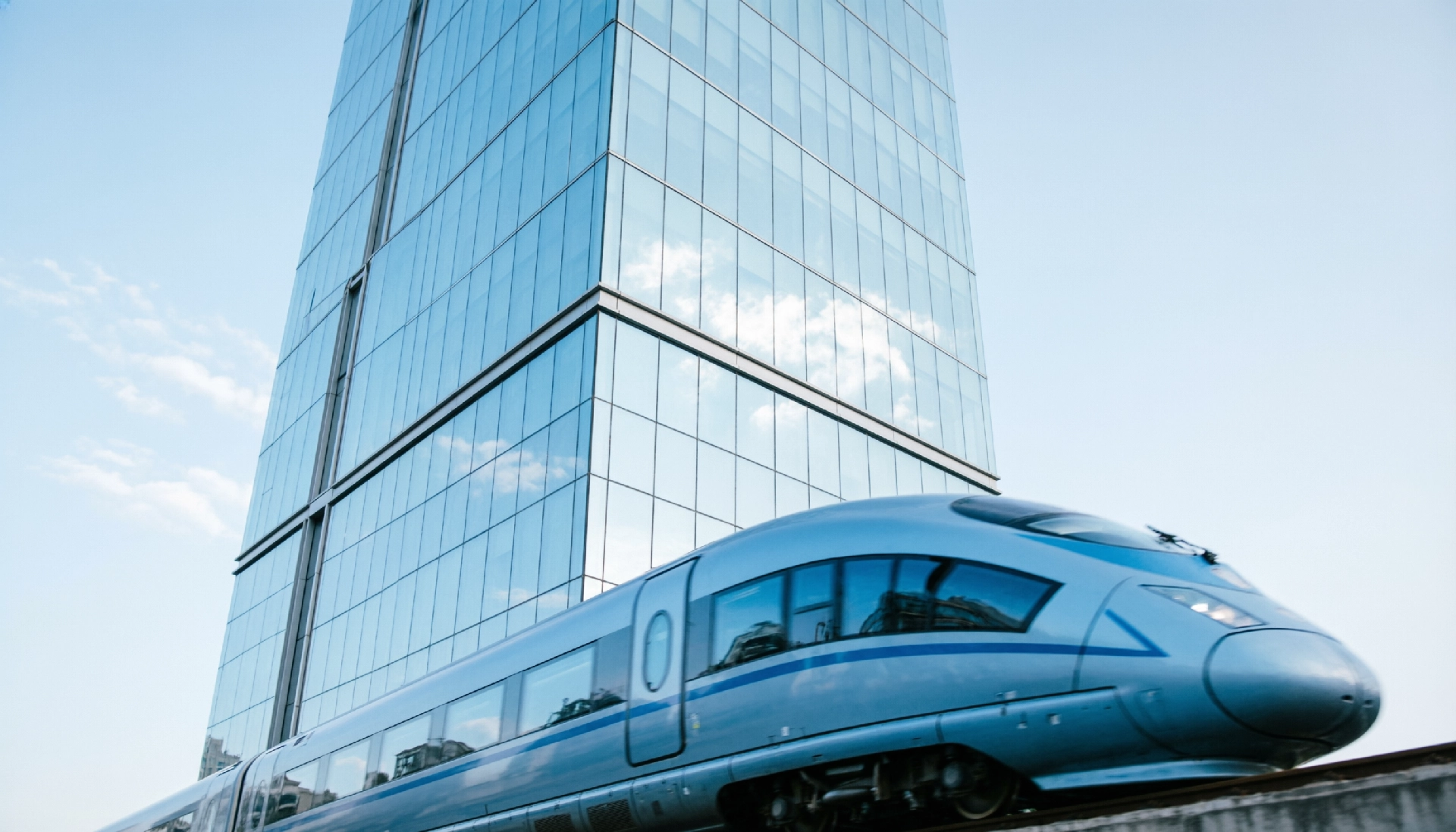
- In a modern train, your call drops at the first tunnel... but also in the open countryside.
- In a brand new open space, your smartphone shows two bars, but web pages take ten seconds to load.
- In an energy-efficient building, you sometimes have to press your phone against the window to get a semblance of 4G.
This phenomenon affects millions of daily users today. It is massive, but invisible. It is not a network problem. It is an environment problem.
Connecting without compromise: the founding promise
It is from this observation that nu glass was born. Not from a desire to build new antennas or improve existing telecom infrastructures, but from a radically different idea: what if, instead of adapting the user to the network, we adapted the environment to connectivity?
Where others see a coverage problem to be solved by more power or more equipment, nu glass sees a materials problem.
This usage-centric approach allows for an immediate and concrete impact: more stable calls, uninterrupted streaming, fluid video conferences, responsive browsing. Without ever touching the network itself.
Why companies should care about it right now?
In an office, bad connectivity does not just annoy: it costs. It slows down exchanges, interrupts video conferences, generates frustration, and weighs on collective productivity. In a world where remote work and real-time communications have become the norm, every outage is a dead loss.
In transportation, the stakes are just as strategic. A passenger who cannot work or be entertained during their journey associates this bad experience with the railway operator. Connectivity thus becomes a selection criterion, just like punctuality or seat comfort.
Towards a world without dead zones
The long-term vision of nu glass is ambitious, but perfectly coherent: to eliminate poor reception zones in all enclosed environments. This implies rethinking how buildings are designed, by integrating connectivity as a fundamental criterion, just like insulation or security.
It is not an option. In a hyper-connected world, where everyone expects to be reachable and operational anywhere, disconnected spaces will eventually become unacceptable. nu glass does not just anticipate this evolution. It makes it possible.