
There are two types of innovation. The first improve what already exists: we call them incremental. The second break the rules of the game, redesign a problem, and offer a solution that no one had considered. nu glass undoubtedly belongs to the second category.
To understand why, we first need to look at what happens within the thickness of a window.
The invisible wall in your window
Modern glazes, those that equip low-consumption buildings, high-end trains or contemporary offices, are veritable technological sandwiches. They integrate extremely thin metallic layers, sometimes only a few tens of nanometers thick, which reflect heat inward in winter and outward in summer.
Great for the energy bill. Disastrous for radio waves. These metallic layers act like a transparent cage. Mobile signals, WiFi, 4G, 5G, simply are not allowed to pass. The glass becomes a wall. And the user, a prisoner of a space that is nevertheless open to the outside.
The brilliant idea: do not replace, modify
Faced with this observation, nu glass's intuition is simple, almost childish in its elegance: what if we found a way to let the waves pass... without touching the thermal qualities of the glass?
No replacing windows. No new glazing to produce. No massive construction work. Just a local, precise, invisible modification.
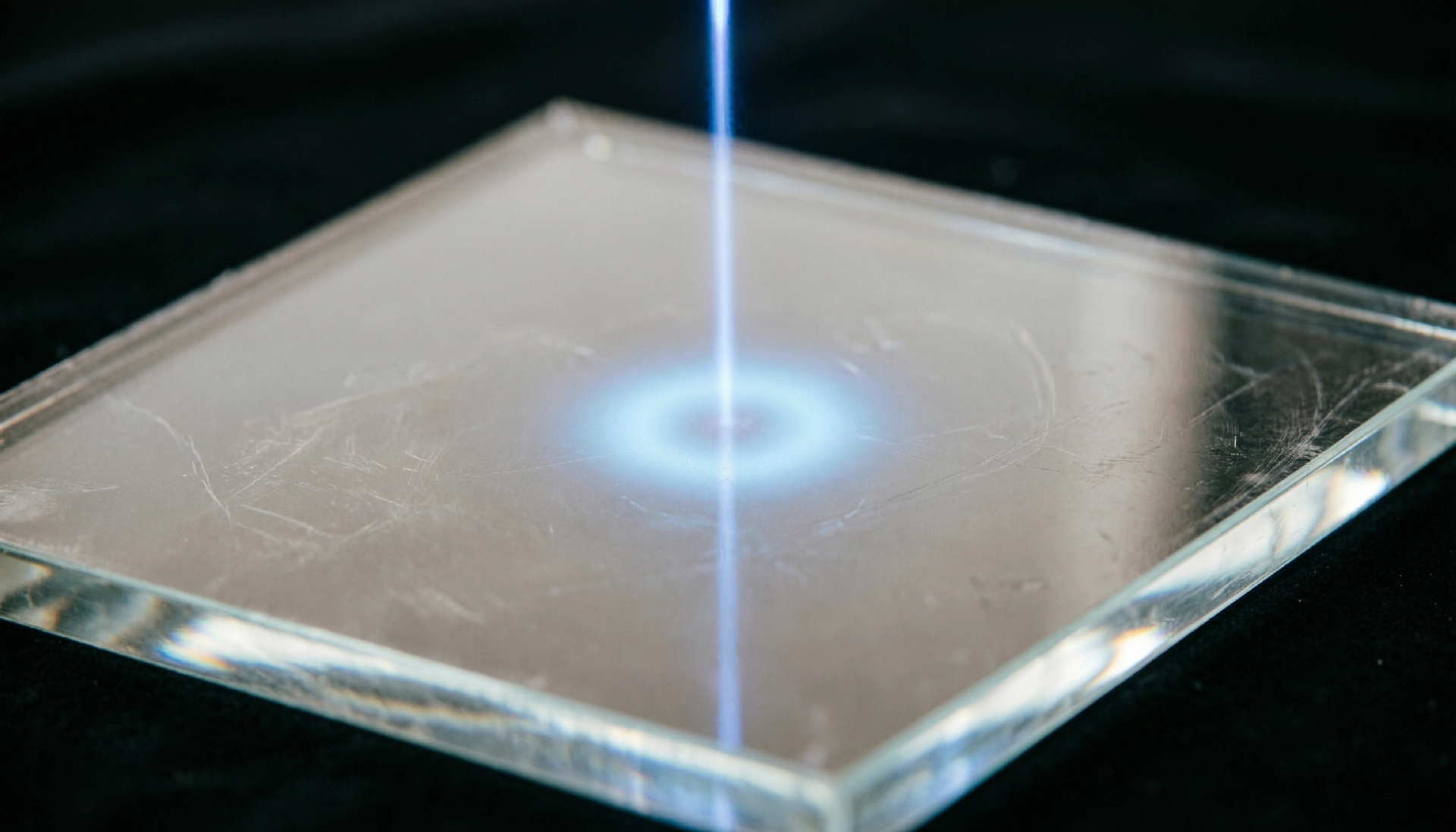
The solution? A patented laser process, born from research conducted at EPFL, which structures the metallic layer at the microscopic scale.
In concrete terms, the laser engraves a network of patterns so fine that they are imperceptible to the naked eye, but sufficient to open "doors" for radio waves. The thermal properties remain intact. Insulation does not change. Aesthetics neither. But the signal gets through.
Why it is true deeptech
- Strong scientific foundation: the technology relies on years of research in materials physics and optics.
- Mastery of nanoscale: the process operates where light and matter meet.
- Industrial precision: applying this treatment on a large scale, flawlessly, without performance loss, is a major engineering challenge.
It is not a mobile app. It is not an algorithm. It is an innovation that touches matter itself, and transforms a physical problem into a concrete solution.
A formidable competitive advantage
- A unique solution in the world: no one else today offers to treat existing glazes to make them transparent to waves without altering their thermal performance.
- A high technological barrier: laser expertise, process control, and a fine understanding of wave-material interactions constitute a difficult gap to bridge.
- Strong differentiation: where others sell additional antennas or repeaters, nu glass acts at the source.
A Swiss story, a global ambition
nu glass's DNA is rooted in Swiss scientific excellence. EPFL is not just a passing place: it is a cradle. And this origin is not anecdotal. It guarantees a rigor, a standard, and a far-sighted capacity that shine through at every stage of development.
But the technology itself has no borders. What works in a Lausanne laboratory will work tomorrow on a train in Tokyo, a skyscraper in New York, or an airport in Dubai. Swiss science, serving a more connected world.